

TSPU's Education Center in Rwanda wraps up its first academic season
Ninety-one students received certificates for completing a Russian-language course at the Center for Open Education in Kigali, Rwanda. The training program was developed and delivered by staff of TSPU’s Institute of Foreign Languages and International Cooperation with the support of the Ministry of Education of the Russian Federation and the My History foundation.
The TSPU Center in Rwanda opened in October 2025. Vera Golubeva, Senior Lecturer at the Department of English Philology and Intercultural Communication and Deputy Director of the Institute for Educational Work, led the 36-hour educational program Discover Russia, which took place from October 10 to November 7.
During their Russian-language classes, participants studied basic vocabulary by completing several thematic modules—My Introduction, My Family, My City—covered grammar fundamentals, and practiced Russian phonetics.
According to Vera Golubeva, some challenges were related to the pronunciation of certain sounds and the use of gender in pronouns.
«Difficulties related to the pronunciation of Russian sounds have been solved by providing video demonstrations showing the articulation of specific sounds and by comparing them with English. Regular conversational exercises were designed to help learners correctly use gendered possessive pronouns. These allowed students to practice the rules through real conversational scenarios in Russian».
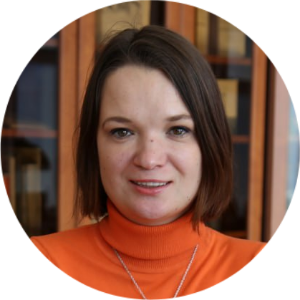
In addition, the instructor conducted a series of cultural and educational events for the Rwandan participants, aimed at promoting the Russian language and culture on the African continent.
TSPU’s Center for Open Education celebrated its first graduating class with a certificate ceremony. The event was also attended by Alexander Sizov, Consul of the Russian Federation in the Republic of Rwanda; Jean Berkman Ndayishima, Director of the «Rays of Hope» school; and Célestin Ntivuguruzwa, Professor at the University of Rwanda—all of whom praised the achievements of the learners..
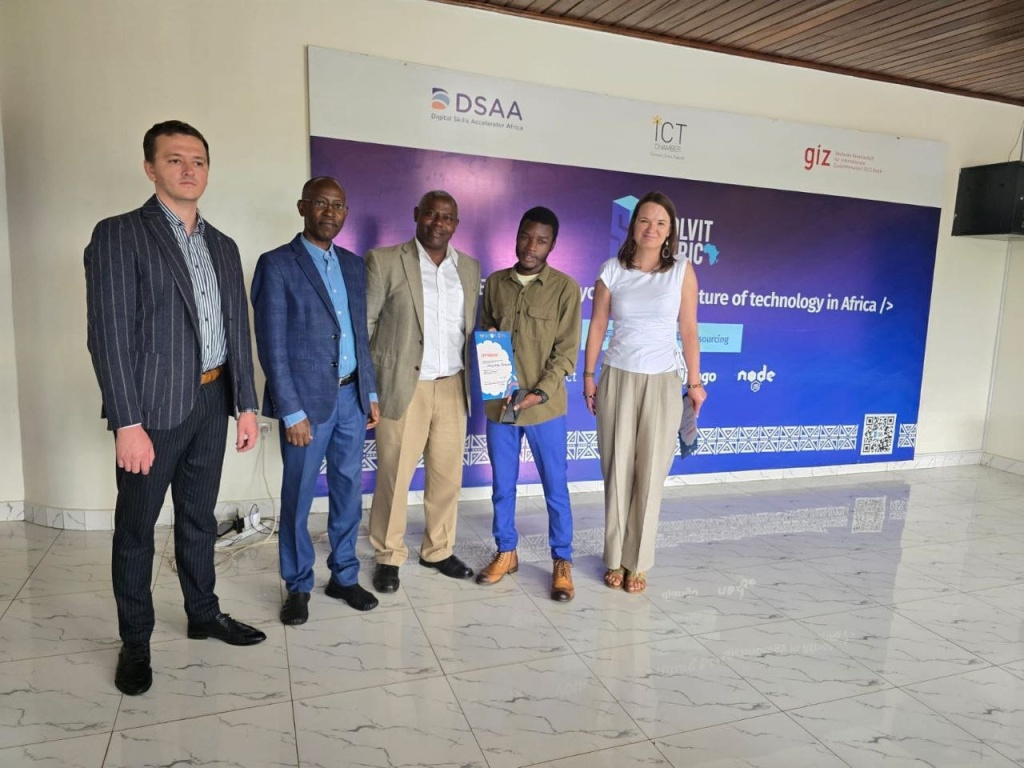

«Despite the fact that the Center in Rwanda has been operating for only a short time, we managed to almost double the planned enrollment and audience reach. This became possible largely thanks to our three years of experience working in Kenya: we rely on approaches that have already proven effective, while also carefully taking into account Rwanda’s specific context, its linguistic environment, educational needs, and cultural background», — says Vadim Zyubanov, Head of the Office of International Cooperation at TSPU’s Institute of Foreign Languages and International Cooperation.
Zyubanov noted that the success of the TSPU Center is closely linked to the support provided by the Embassy of the Russian Federation, as well as by educational and other organizations in the Republic of Rwanda.
«I would like to express my gratitude to the Embassy of the Russian Federation in the Republic of Rwanda and personally to Ambassador Extraordinary and Plenipotentiary Alexander Polyakov for their organizational and informational support. We are grateful to the Rays of Hope school, as well as to Sora Foundation Rwanda and the Rwanda Atomic Energy Board for their contributions. And of course, we deeply appreciate the assistance of the Rwandan people, who help us, support the Center’s initiatives, and show genuine interest in the Russian language and culture. We are sure that the outcomes are just the start, and we anticipate that the Center's work will be successfully carried out in the upcoming year».
Learners at the Center said that they had significantly underestimated the difficulty of the Russian language, and noted their plans to continue studying next year to strengthen their current level and improve their skills.
«The first educational season of the Center for Open Education in Rwanda confirmed a high level of interest among Rwandans in learning the Russian language and culture. However, an analysis of the initial results showed that Rwandan learners — especially those with a technical background — often underestimate the early difficulties of Russian. Their expectations of quickly mastering the language shifted toward an understanding that more intensive and in-depth reinforcement of phonetics and grammar was necessary, — said Anna Bogdanova, Director of the Institute of Foreign Languages and International Cooperation at TSPU. — One of the organizational challenges was a significant imbalance in the size of the morning and evening groups — the evening groups were three times larger. To optimize the educational process and improve learning conditions, an additional daytime group will be opened next year. As part of the further development of the Center’s activities in Rwanda, we also plan to expand the range of courses. Special attention will be given to deepening the cultural component through additional cultural and educational events. These initiatives, aimed at providing a deeper immersion in Russian culture, are intended to boost the effectiveness of our mission to promote the Russian language and culture on the African continent — in particular, in Rwanda».
The second educational season in Rwanda is planned for autumn 2026.
12 March 2025


